



Introduction
Smart contact lenses are becoming one of the most interesting ideas in modern health technology. Unlike normal contact lenses that mainly help people see clearly, these advanced lenses can combine tiny sensors with wireless technology to collect health data. One of the most studied uses is glucose monitoring through tears.
The idea is simple. A smart lens sits on the eye and can interact with the tear film. Tiny sensors may detect glucose in tears and send information to another device. This could one day offer people a more comfortable way to track glucose levels without regular finger pricks. Recent research shows that tear-based glucose monitoring has made meaningful progress, but the technology is still being developed and needs more clinical testing before it can become a common medical tool.
What Smart Contact Lenses for Glucose Monitoring Work
Using Tears as a Source of Health Data
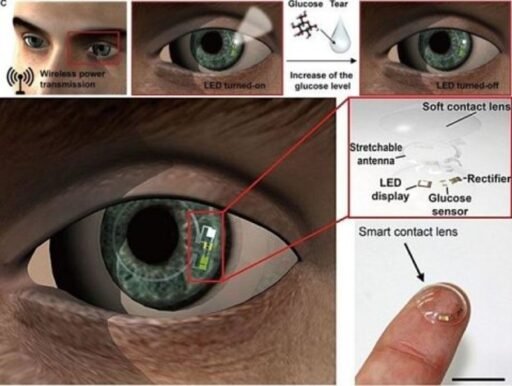
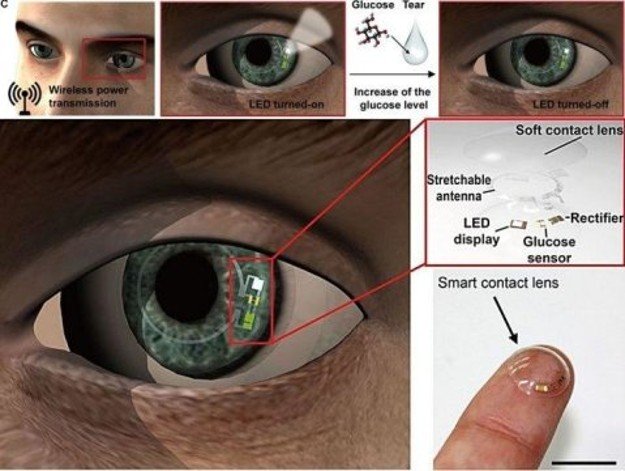
Tears contain many biological substances that can provide useful information about the body. Glucose is one of the substances researchers are studying. A smart contact lens can use a tiny biosensor to interact with the tear fluid and detect changes in glucose concentration. The sensor may use an electrochemical or optical method to identify glucose.
The information can then be processed by a small electronic system and transferred through wireless communication. Research has explored different sensor materials and designs for this purpose. This approach is different from many current continuous glucose monitoring systems.
Turning Sensor Data Into Useful Information
Detecting glucose is only one part of the process. A useful health device must also convert sensor signals into information that people and health professionals can understand. A future smart lens could connect with a smartphone or another nearby device.
The system could display glucose trends and may provide alerts when readings change. Wireless communication is already being studied in smart contact lens designs, and recent research has examined near-field communication for real-time tear glucose monitoring.
Why Non-Invasive Glucose Monitoring Matters
People who need regular glucose checks may find traditional testing tiring or uncomfortable. Fingerstick testing requires a small blood sample, and continuous glucose monitoring systems can require sensors that remain attached to the body. Smart contact lenses could offer another option if researchers can make them accurate, safe, and easy to use.
The lens would be worn like a contact lens, while the sensor could collect information from the tear film. This is one reason why smart contact lenses have attracted interest in digital health. Researchers are also studying their use for eye pressure monitoring, inflammation, and other health applications.
Benefits of Smart Contact Lenses for Glucose Monitoring
Comfortable Health Monitoring
One major advantage could be convenience. A person would not need to hold a glucose meter every time a reading is needed. Instead, the sensor could work while the lens is being worn.
For people who already use contact lenses, this could make health monitoring feel more natural. However, comfort depends on many factors, including lens material, sensor size, oxygen flow, and how long the lens can safely remain on the eye.
Real-Time Glucose Tracking
Continuous health monitoring is another important goal. Rather than providing only occasional readings, a smart lens could potentially collect repeated measurements throughout the day. Research published in 2026 reported promising findings from studies of tear glucose monitoring. The review found strong relationships between tear glucose and blood glucose across the studies it examined.
It also noted a physiological delay between changes in tears and changes in blood glucose. This delay is important because a glucose monitoring device must provide information at the right time.
Better Personalized Health Data
Smart contact lenses could become part of personalized digital health systems. Data from the lens could potentially work alongside information from smartphone activity trackers, diet records, and other health devices.
This could help create a broader picture of a person’s health. In the future artificial intelligence could also help identify patterns in glucose data and provide useful insights. Such systems would still need strong medical validation before being used for important treatment decisions.
The Main Challenges
Accuracy Is a Major Concern
The biggest challenge is accuracy. Measuring glucose in tears is not exactly the same as measuring glucose in blood. Tear glucose exists at lower levels, and the tear environment can change. A recent review reported a physiological lag of about five to ten minutes between tear glucose and blood glucose changes.
It also highlighted issues caused by low glucose concentrations and the complex composition of tears. For everyday wellness tracking, this may be manageable in the future. For diabetes treatment, however, accuracy must meet strict medical standards.
Eye Safety and Comfort
The eye is highly sensitive. Any electronic contact lens must be designed with safety as a top priority.
A useful lens needs to maintain oxygen flow to the cornea. It must also remain comfortable and should not damage the eye during normal use. Current research highlights factors such as biocompatibility, oxygen permeability, flexibility, wettability, and mechanical properties as important design requirements.
Power and Wireless Communication
Electronic devices require energy. A smart contact lens therefore needs a safe and practical way to power its sensors and communication system.
Researchers are examining wireless approaches, including near-field communication. The challenge is to provide enough power without making the lens large, heavy, or uncomfortable. Data transmission must also be reliable while the person moves through normal daily activities.
Clinical Testing and Regulation
Laboratory success does not automatically mean that a medical device is ready for consumers. Smart contact lenses need clinical testing that can show whether they are safe, reliable, and accurate.
Recent research reviews continue to identify clinical validation as a major requirement for commercial development. Researchers also point to the need for more evidence on long-term safety, patient adherence, cost, and manufacturing.
This distinction matters for consumers. A technology can be promising without being an approved medical product.
Are Smart Glucose Contact Lenses Available Now?
Current Technology Is Still Developing
Smart contact lenses for glucose monitoring remain an emerging technology. Research has produced promising sensor designs, but that does not mean consumers can replace established glucose monitoring systems with these lenses.
The FDA has warned consumers about unauthorized wearable products that claim to measure blood glucose without piercing the skin. While that warning concerns smartwatches and smart rings rather than contact lenses, it shows why people should be careful with claims about noninvasive glucose monitoring.
People who need accurate glucose information should continue to use medical devices that are appropriate for their condition and approved or authorized for their intended use.
What the Future May Look Like
From Wearable Device to Health Platform
The future of smart contact lenses may go beyond glucose monitoring. Researchers are studying lenses that can monitor different biological signals and support personalized healthcare. A single lens could eventually combine multiple sensors with wireless communication.
It could potentially collect health information while another connected device analyzes the data. This could make smart contact lenses part of a larger wearable health system. Instead of visiting a device only when a person wants a measurement, the technology could support continuous health tracking.
AI Could Add Another Layer
Artificial intelligence may also play an important role. A smart lens could collect data while AI software analyzes trends over time.
For example, a future system might identify unusual glucose patterns and send information to a connected health platform. It could combine glucose data with meals, physical activity, sleep, and other inputs.
Smart Contact Lenses and the Future of Digital Health
Smart contact lenses for glucose monitoring represent a promising area of medical technology. They combine wearable sensors, bioscience materials engineering, and wireless communication in a very small device.
The most exciting possibility is simple. A person may one day be able to monitor important health information without interrupting normal daily activities. Yet the technology still faces major challenges related to accuracy, eye safety, power, comfort, clinical testing, and regulation.
Research in 2025 and 2026 shows that progress is continuing. Studies have demonstrated promising approaches for tear glucose detection and wireless data transfer while also making clear that more validation is needed before widespread clinical use.
FAQs
- Can smart contact lenses measure glucose?
Smart contact lenses are being developed to detect glucose in tears. However, the technology is still in research and is not yet a replacement for approved glucose monitoring devices. - How do smart contact lenses for glucose monitoring work?
These lenses use tiny sensors that interact with tear fluid to detect glucose-related signals. The collected data may then be processed and sent wirelessly to a connected device. - Are glucose monitoring contact lenses available now?
Smart contact lenses for glucose monitoring are still an emerging technology. More clinical testing is needed before they can become widely available for medical use. - Can smart contact lenses replace a CGM?
No. Smart contact lenses should not currently be considered a replacement for approved continuous glucose monitoring systems. - What is the future of smart contact lenses?
Future smart contact lenses may combine glucose sensors with other health monitoring features. They could become an important part of personalized digital health and wearable medical technology.
Buy Microfiber Cleaning Cloths. Click Here
Final Thoughts
Smart contact lenses for glucose monitoring represent a promising step toward more comfortable and personalized digital health. Research shows that tear-based glucose sensing can provide useful information and may support real-time monitoring. However, the technology is still developing, and larger human studies are needed to confirm its accuracy, safety, and long-term reliability.
For now, these lenses should be viewed as an emerging medical technology rather than a replacement for approved glucose monitoring systems. If researchers can solve the remaining challenges, smart contact lenses could eventually make glucose monitoring easier and less disruptive for many people living with diabetes.