


Introduction
Telehealth has changed how patients connect with doctors. A person can now speak with a medical professional without traveling to a clinic or hospital. Video calls have made healthcare more accessible and have become useful for routine care and follow-up visits. Yet traditional video calls still have limits. A doctor and patient appear as flat images on a screen. Important visual details can be harder to understand.
Medical scans and body structures may also be difficult to explain through a normal video call. Hologram-based medical consultations could take remote healthcare to a new level. Instead of seeing a doctor only through a flat screen, patients may be able to interact with a life-sized three-dimensional image. Doctors may also examine 3D medical models and share complex information in a more natural way.
Research published describes holographic transmission as a developing technology for real-time medical care. It highlights uses such as surgical guidance and remote medical education.
What Are Hologram-Based Medical Consultations?
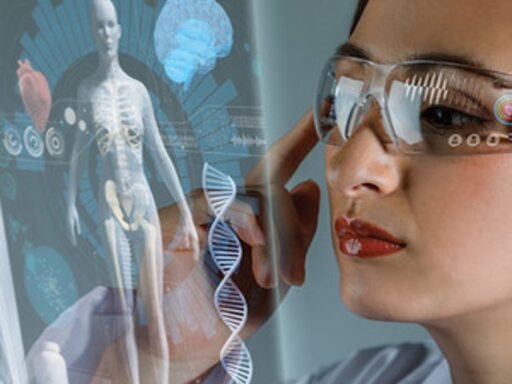
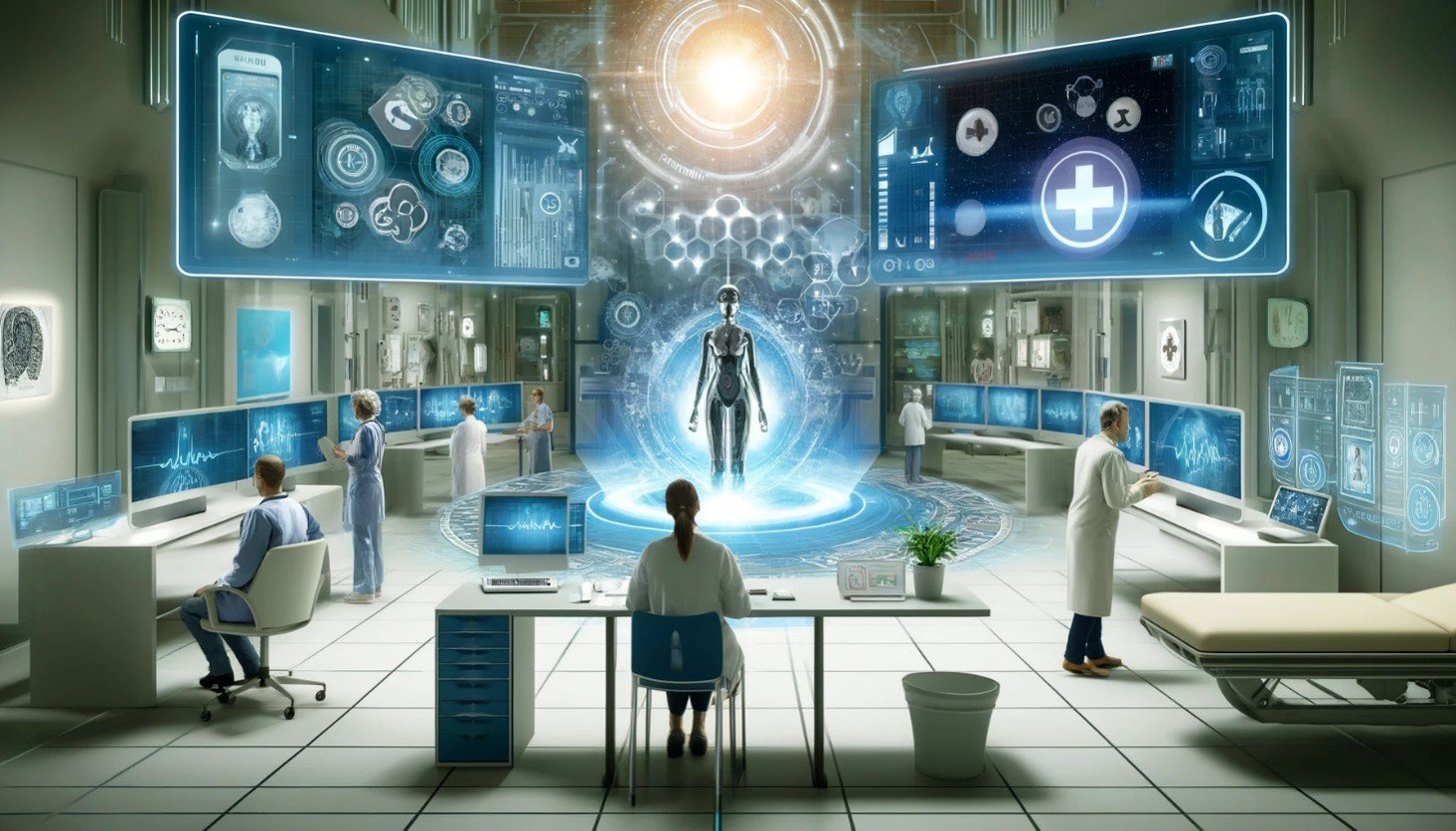
Hologram-based medical consultations use 3D imaging and related technologies to create a more realistic remote interaction between healthcare professionals and patients. The exact technology can vary. Some systems use holographic displays while others combine cameras with augmented reality or mixed reality devices. The main goal is to make remote communication feel closer to an in-person meeting.
A doctor may appear in three dimensions rather than as a small image on a screen. Medical images may also be presented as 3D objects that can be viewed from different angles. This approach is still developing. It should not be treated as a replacement for every physical examination. Some medical problems require direct examination tests or emergency treatment.
Read AR Glasses for Medical Training: What’s Next?
How Holographic Telemedicine Works
A holographic telemedicine system needs several technologies to work together. Cameras can capture information about a person or medical environment. Computer systems can process that information and create a three-dimensional representation. A high-speed network can then transmit the data to another location. Modern systems can also use augmented reality and extended reality tools. These technologies can allow doctors to view digital information while interacting with a patient or medical professional.
A recent review found that augmented reality has already been studied for remote patient evaluation, medical intervention, and medical education. Fast internet is another important part of the process. Holographic communication can require a large amount of data. Any major delay can reduce the quality of the experience.
Why Holographic Consultations Matter
The biggest advantage of hologram-based medical consultations is improved visual communication. A doctor can explain a condition with the help of a 3D model rather than relying only on words or flat images. For example, a surgeon could use a three-dimensional model of an organ to explain a planned procedure. A specialist could review a complex scan with another doctor in a different city.
Medical students could also learn from realistic 3D demonstrations without being in the same room as the instructor. Research into 3D telemedicine has already examined whether more realistic remote consultations can improve the experience compared with standard 2D communication.
Why Holographic Consultations Matter
- 3D images can make complex medical details easier to understand.
- Patients can connect with specialists without long-distance travel.
- Doctors can use 3D models to explain health conditions and treatments.
- Students can learn anatomy and procedures through realistic 3D models.
- Doctors in different locations can discuss complex cases in real time.
Better Access to Medical Specialists
Access to specialist care remains a challenge in many regions. People living in rural areas may need to travel long distances to see the right doctor. Hospitals in smaller communities may also have limited access to specialist knowledge. Holographic telemedicine could help reduce this gap. A specialist might support a local healthcare team from another city or country.
The local clinician could remain with the patient while the remote specialist provides guidance. This concept is especially important for complex cases. A specialist may be able to review medical information and communicate with the local team without requiring immediate travel.
Medical Education and Training
Hologram technology may also have a major role in medical education. Traditional medical training often depends on textbooks, videos, physical models, and access to clinical settings. Three-dimensional technology can add another layer of learning. Students could study human anatomy through interactive 3D models. Surgeons could use holographic systems for procedural training.
Remote experts could guide students during simulated medical procedures. A 2026 review of hologram-based healthcare education found that hologram learning may support spatial understanding and procedural accuracy. It also noted that the strongest potential appears in simulation and high-precision tasks, while hardware cost, usability, and cognitive load remain important challenges.
Holographic Support for Surgery
One of the most promising uses is remote surgical support. A specialist does not always need to be physically present to provide guidance. A holographic system could allow a specialist to view a procedure and communicate with the medical team. Digital information could potentially be placed within the clinician’s field of view. This may help with surgical planning and remote teaching.
Recent research has reported proof-of-concept holographic transmission between medical teams in different countries. The work included surgical telementoring and described bidirectional three-dimensional communication with very low perceived delay.
Better Patient Education
Medical information can be difficult for patients to understand. A doctor may explain a condition using medical terms that are unfamiliar to the patient. Even a standard scan may not make sense without careful explanation. A 3D medical model could make this process easier. A doctor could show the location of a problem and explain how a treatment may affect the body.
This could improve patient understanding and support better communication. Digital health tools already aim to give patients greater access to health information and help providers improve efficiency and personalize care.
Benefits for Healthcare Providers
Doctors and hospitals may also gain practical benefits from advanced telehealth technology. Remote consultations can reduce the need for some travel. Specialists can support multiple locations without being physically present at each site. Holographic communication may also improve collaboration between medical teams. A doctor could share a 3D view of a case with another specialist and discuss the issue in real time.
- Less Travel: Remote care can reduce travel for doctors and patients.
- Expert Access: Specialists can support patients in different locations.
- Better Teamwork: Doctors can share 3D medical views in real time.
- Faster Support: Remote experts can help with complex medical cases.
- Efficient Care: Hospitals can connect teams without physical travel.
However, the benefits will depend on the quality of the technology. A poor connection or low-quality image could create more problems instead of solving them. Healthcare providers therefore need reliable hardware, strong networks, and clear clinical procedures.
Challenges of Hologram-Based Medical Consultations
Despite its potential, holographic telemedicine faces several major challenges. The first challenge is cost. Advanced cameras, display computing systems, and network infrastructure can be expensive. Smaller clinics may not have the budget to install and maintain such systems. The second challenge is internet speed. Holographic communication can require large amounts of data. Network delays can reduce the quality of real-time interaction.
Research published in 2026 identifies latency sensitivity as one of the major barriers to wider use. Privacy is another concern. Medical consultations contain highly sensitive information. Holographic healthcare systems must protect patient data from unauthorized access.
The Future of Holographic Telehealth
The future of hologram-based medical consultations will likely depend on improvements in hardware network technology, artificial intelligence, and medical software. As 5G and other high-speed networks expand, real-time communication may become more practical. Better cameras and smaller devices may also make holographic systems easier to use. Artificial intelligence could support the process by organizing medical data and helping doctors interpret digital information.
The most realistic future is not a healthcare system based entirely on holograms. Instead, holographic technology is more likely to become one part of a larger digital health system. Patients may use regular telehealth for simple needs, while 3D systems are used for complex consultations, specialist care, medical training, and selected clinical procedures.
FAQs
- What are hologram-based medical consultations?
Hologram-based medical consultations use 3D imaging and advanced communication technology to help doctors and patients interact remotely in a more realistic way than traditional video calls. - How can holograms improve telehealth?
Holograms can make medical communication more visual and interactive. Doctors may use 3D models to explain health conditions and support remote consultations. - Can holograms replace in-person doctor visits?
No. Holographic consultations cannot replace every physical examination or medical procedure. Some conditions still require direct examination and in-person treatment. - How can holographic technology help medical training?
Medical students and professionals can use 3D models and remote demonstrations to study anatomy and practice complex procedures in a more interactive environment. - What are the main challenges of holographic telemedicine?
The main challenges include high technology costs. Strong internet infrastructure. Patient privacy concerns. Technical complexity and the need for more clinical research.
Conclusion
Hologram-based medical consultations could change the way doctors and patients communicate across distance. By adding three-dimensional interaction to telehealth these systems may make medical information easier to understand and remote collaboration more realistic.
The technology has potential in specialist consultations medical education surgical guidance and patient communication. Recent research has demonstrated that real-time holographic medical communication is moving beyond theory and into practical testing.
Still holographic healthcare is not yet a complete replacement for traditional medical care. High costs network requirements privacy risks and the need for stronger clinical evidence remain important barriers.