


Introduction
A good daily routine for kids can make family life calmer and more organized. Children often feel more secure when they know what will happen next. A clear routine can also help them build healthy habits around sleep, meals, school, play, homework, and personal care.
A routine does not need to fill every minute of the day. In fact, a schedule that is too strict can make children feel stressed. The best routine gives children a clear structure while still leaving room for rest, fun, and family time. The American Academy of Pediatrics notes that children tend to do best when routines are regular, predictable, and consistent.
For parents, the goal is not to create a perfect timetable. The goal is to create a simple daily rhythm that a child can follow with less help over time.
Read How to Build Confidence in Children: Simple Parent Tips
Why a Daily Routine Matters for Kids
Children spend much of their early life learning how to manage time, tasks, and emotions. A simple routine gives them repeated chances to practice these skills. When children know what comes next, they may have fewer reasons to argue about basic tasks. They can learn that breakfast comes before school, homework comes after rest, and bedtime comes after getting ready for sleep.
A predictable schedule can also support emotional well-being. The American Academy of Pediatrics says structured routines can give children a sense of stability and connection. A routine can also help parents. Instead of giving many new instructions each day.
Start With Your Child’s Real Needs
Before creating a kids’ daily schedule, think about your child’s age, school hours, sleep needs, energy level, and family life. A routine for a preschool child will not look the same as a routine for a 10-year-old. Younger children may need more help with dressing, eating, and cleaning up.
- Consider your child’s age and daily needs.
- Match the routine with school hours.
- Make enough time for sleep and rest.
- Adjust tasks to your child’s energy level.
- Create a routine that fits your family life.
Older children can take more control of homework, school bags, and simple chores. You should also look at your child’s natural rhythm. Some children are ready to work soon after school; others need a snack and quiet time first.
Create a Simple Morning Routine
Mornings can become stressful when every task happens at the last minute. A simple morning routine for kids can reduce this pressure. A basic morning may include waking up, using the bathroom, getting dressed, making the bed, eating breakfast, brushing teeth, and preparing for school. Try to prepare some things the night before, put school clothes in one place, pack the school bag, and prepare lunch when possible.
This can reduce the number of tasks that need to happen before leaving home. The American Academy of Pediatrics also suggests preparing items the night before to help mornings run more smoothly.
Make School Time Part of the Routine
School is a major part of a child’s day. A useful routine should support learning without making the child feel like every hour is work. Before school, make sure your child has eaten and has the items needed for the day. After school, give them time to relax before starting homework if they need it.
Some children can start homework soon after arriving home. Others work better after a short break. snack or period of active play. The American Academy of Pediatrics recommends a healthy after-school pattern that can include a snack, exercise, relaxation, and study.
Add Exercise and Active Play
Children need more than school and homework. Active play should have a place in the daily schedule. Outdoor play, walking, cycling, running, sports, and simple family games can help children stay active. Physical activity can also give children a break after a long school day.
You do not need expensive equipment; a ball, jump rope, or a safe outdoor space may be enough. Try to avoid filling every afternoon with classes and planned activities. Children also need unplanned play and quiet time.
Build Healthy Meal Habits
Food is another key part of a healthy daily routine for kids. Try to keep breakfast, lunch, dinner, and snacks around regular times. A predictable meal pattern can make the day easier to manage. Breakfast can be simple. Depending on the child’s needs and family choices. It might include eggs, whole grains, fruit, yogurt, or another balanced option.
Family meals can also create time for conversation. The American Academy of Pediatrics recommends making dinner an important family time when possible and reducing distractions such as television and electronic devices.
Set a Consistent Bedtime
Sleep should be one of the main parts of a healthy routine for children. Children need enough sleep to support growth, learning, mood, and daily functioning. A regular bedtime can help a child understand when the day is coming to an end. The American Academy of Pediatrics recommends consistent sleep routines and notes that regular daily patterns can support healthy sleep habits.
Create a calm sequence before bed. This might include putting toys away and changing into pajamas. brushing teeth, reading a book, and going to bed. A simple routine such as “brush, book, bed” can help younger children understand what comes next.
Manage Screen Time
Screens can easily take over a child’s free time. A good family routine should include clear rules for television, games, phones, tablets, and computers. The exact rules can depend on age and family needs. What matters most is that children understand when screens are allowed and when they need to stop.
Avoid letting screen use push out sleep, exercise, homework, meals, or family time. The American Academy of Pediatrics also recommends keeping screens out of children’s bedrooms at night and turning them off at least one hour before bedtime to support sleep.
Give Kids Some Responsibility
A good routine should not mean that parents do everything for the child. As children grow, give them simple responsibilities. A young child may put toys away. An older child may pack a school bag, make the bed, or help prepare for the next day. Age-appropriate chores can help children develop responsibility and confidence.
The American Academy of Pediatrics also connects chore routines with a child’s sense of contribution and self-esteem. Start with small tasks. Give clear instructions and praise effort. If a child makes a mistake, use it as a chance to teach rather than a reason to take over.
Use a Visual Routine Chart.
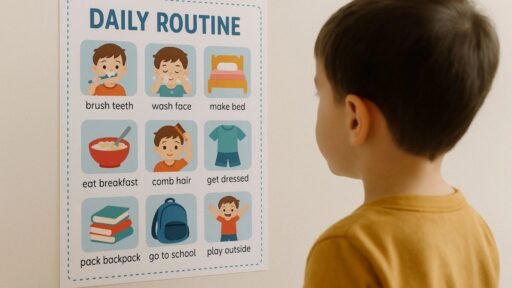
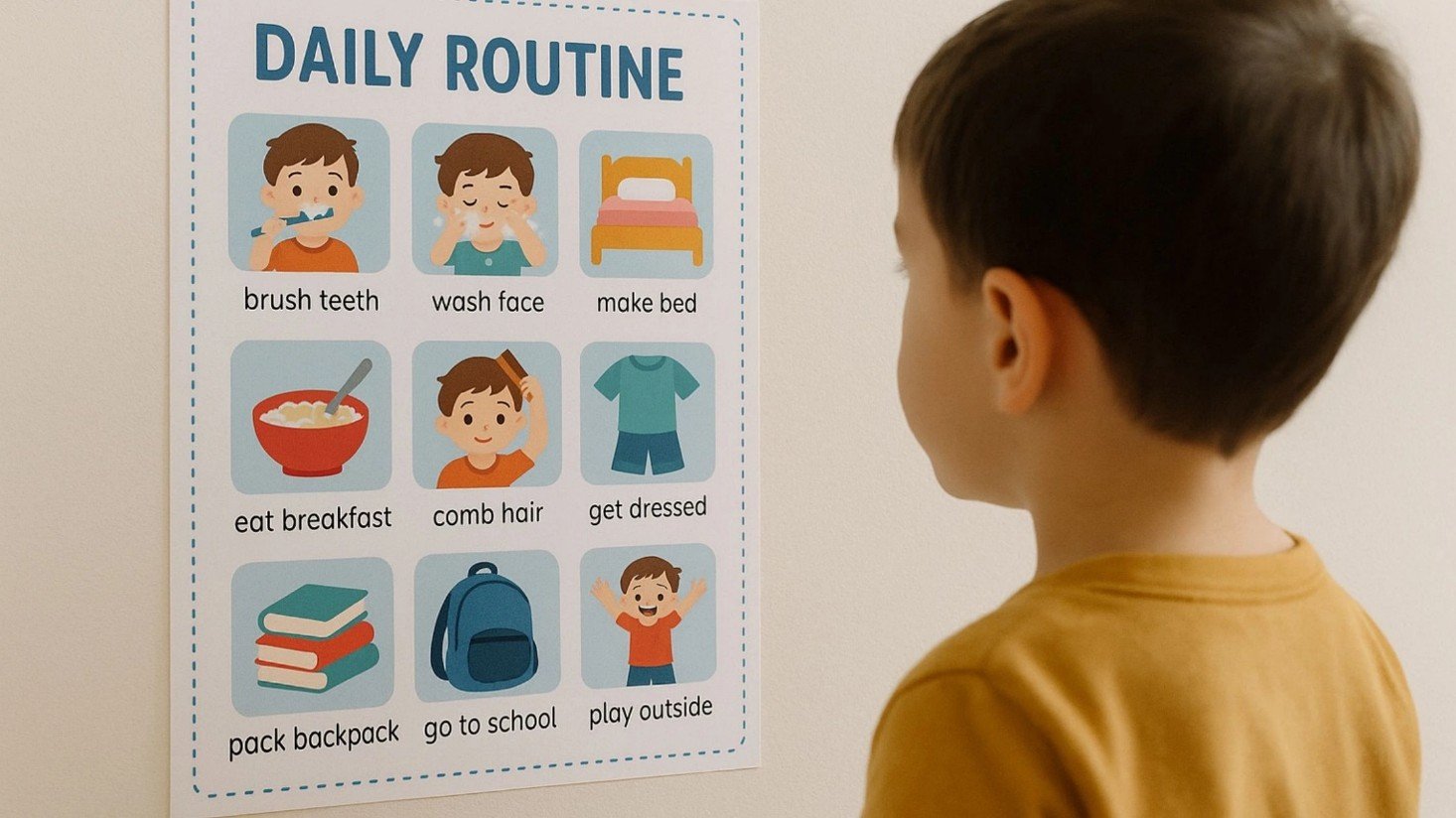
A daily schedule for kids can be easier to follow when children can see it. For younger children, use pictures along with simple words. For older children, a written schedule may work better.
Place the chart somewhere easy to see, such as the bedroom, kitchen, or study area. Keep the list short. If there are too many tasks, children may feel overwhelmed.
You might include:
- Wake up
- Get dressed
- Eat breakfast
- Go to school
- Have a snack
- Play or exercise
- Do homework
- Eat dinner
- Get ready for bed
- Read
- Sleep
The aim is to help children remember the order of their day rather than create another source of pressure.
FAQs
Q1. What is a good daily routine for kids?
A good daily routine for kids includes regular times for waking up, meals, school, homework, play, exercise, family time, and sleep.
Q2. How can I create a daily routine for my child?
Start with the most important parts of the day, such as sleep, meals, school, homework, and play. Then arrange them in a simple order that your child can understand.
Q3. Why is a daily routine important for children?
A routine gives children structure and helps them understand what to expect during the day. It can also support healthy habits, responsibility, and independence.
Q4. Should children follow the same routine every day?
The main routine can stay similar each day, but it does not need to be the same. Weekends, holidays, and family events may require some flexibility.
Q5. How can I help my child follow a routine?
Keep instructions simple and use a visual routine chart if needed. Give your child small responsibilities and praise their effort as they learn to manage daily tasks.
Buy Preschool Learning Activities Educational Workbook
Final Thoughts
Building a daily routine for kids is less about controlling every hour and more about creating a stable pattern that children can understand. Start with basic needs such as sleep, food, school, movement, and family time. Add simple responsibilities as your child grows. Use clear expectations and give children small choices.
Most importantly, stay flexible; a strong routine should provide structure while still allowing children to enjoy their day. When a routine becomes familiar. Children can begin to manage more of their own tasks. This can support independence, confidence, and healthy habits that may stay with them as they grow.