



Introduction
School days can be busy for children. They need enough energy to learn in class. They also need food that can keep them full until the next meal. This is why choosing healthy snacks for school lunchboxes is an important part of planning a balanced school day.
A good snack does not need to be expensive or hard to prepare. Simple foods such as fresh fruit, vegetables, yogurt, cheese, whole-grain crackers, eggs, and hummus can make useful lunchbox choices. The best option can also depend on your child’s age, appetite, activity level, food allergies, and school rules.
Nutrition experts often recommend using snacks as a chance to add more fruit and vegetables to a child’s diet. Pairing these foods with protein, dairy, or whole grains can also make a snack more satisfying
Read Healthy Breakfast Ideas for School Kids
What Makes a Healthy School Snack?
A healthy school snack should provide useful nutrients without being overloaded with added sugar, salt, or highly processed ingredients. It should also be easy for a child to eat during a short school break. A simple approach is to combine two food groups.
For example, apple slices with cheese provide fruit and dairy. Carrot sticks with hummus combine vegetables with a source of protein and healthy fats. Whole-grain crackers with cheese are another easy choice. The goal is not to make every snack perfect. Instead, focus on variety across the day and week.
Fresh Fruit With Cheese
Fresh fruit is one of the easiest healthy school snacks for kids. Apples, bananas, pears, mandarins, berries, and grapes can be packed with little preparation. Adding cheese can make the snack more filling. Cheese also provides protein and calcium, which are important nutrients during childhood.
Try apple slices with small cheese cubes. You can also pack grapes with a cheese stick or pair pear slices with mild cheddar. If your child does not like one type of fruit, try another. Giving children several choices can make healthy eating easier.
Yogurt With Fresh Berries
Plain or low-added-sugar yogurt can be a useful lunchbox snack. It provides protein and calcium while berries add natural sweetness and fiber. You can use strawberries, blueberries, raspberries, or chopped fruit.
For extra texture, a small amount of whole-grain cereal can be packed separately. For school lunches, use an insulated lunch bag and a suitable cold pack when the food needs to stay chilled.
Carrot and Cucumber Sticks With Hummus
Vegetable sticks are simple healthy lunchbox ideas for kids. Carrots, cucumbers, bell peppers, and celery can be cut into easy-to-hold pieces. Hummus adds flavor and makes vegetables more appealing to many children. It can also provide protein and other nutrients from chickpeas.
Prepare the vegetables the night before and place them in a small sealed container. Keep the hummus separate so the vegetables stay fresh and crisp.
Whole-Grain Crackers and Cheese
Whole-grain crackers can be a practical choice when you need a quick snack. Pair them with cheese instead of packing crackers alone. Whole grains can provide fiber while cheese adds protein and calcium. This combination is easy to portion and does not require complicated preparation.
When buying packaged crackers, read the nutrition label. Look for products with whole grains as a main ingredient and avoid options that are very high in added sugar or sodium.
Apple Slices With Nut or Seed Butter
Apple slices with peanut butter can make a simple and satisfying snack. The fruit provides fiber and natural sweetness while nut butter adds protein and healthy fats. However, parents should always check school allergy rules before packing nuts or nut butter.
Some schools have strict nut-free policies. If nuts are not allowed, sunflower seed butter may be an alternative if permitted by the school.
Hard-Boiled Eggs
Hard-boiled eggs are a convenient high-protein snack for kids. They can help make a small snack more satisfying and are easy to prepare in advance. You can pack a whole egg or slice it into pieces. Add some cucumber slices or a small serving of fruit to create more variety.
Because eggs are perishable, they should be kept cold during the school day. Food safety is especially important when packing foods that normally require refrigeration.
Homemade Oat and Banana Bites
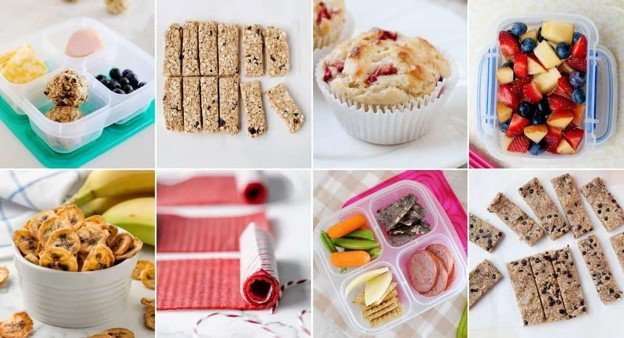
Homemade snacks can give parents more control over ingredients. Simple oat and banana bites can be made with mashed banana and oats. You can add ingredients such as cinnamon or small pieces of fruit. Homemade snacks can also be useful when children have specific food preferences.
Making a batch at home can save time during busy school mornings. Try to keep added sugar low. Naturally sweet ingredients such as ripe bananas can provide plenty of flavor.
Popcorn for Older Children
Plain popcorn can be a light whole-grain snack. It can be a better choice than many highly processed snack foods when prepared with limited salt and added fats. However, popcorn can be a choking hazard for young children.
Parents should consider their child’s age and developmental stage before packing it. For children who are old enough to eat popcorn safely, a small portion can add variety to a school lunchbox.
Whole-Grain Mini Sandwiches
A small sandwich can work well as a snack when children have a larger appetite. Use whole-grain bread and fillings such as egg, chicken, cheese, or hummus. You can cut the sandwich into small squares or fun shapes.
This can make familiar foods more attractive without adding extra sugar. Whole-grain bread can also provide fiber and help create a more balanced snack when paired with a protein-rich filling.
Fruit and Yogurt Cups
A homemade fruit and yogurt cup is another easy option. Add plain yogurt and chopped fruit to a sealed container. You can use banana, strawberries, blueberries, peaches, or mango. If your child likes crunch, add a small amount of oats or whole-grain cereal just before eating.
Avoid relying on sweetened flavored yogurt every day. Some products can contain substantial amounts of added sugar.
Roasted Chickpeas
Roasted chickpeas can be a crunchy alternative to traditional packaged snacks. Chickpeas provide plant protein and fiber. You can prepare them at home with a small amount of oil and mild seasoning.
Keep the seasoning simple because children may be sensitive to strong flavors. This snack can also help introduce children to different forms of nutritious food.
Simple Healthy Snack Combinations
Parents do not need a new recipe every morning. A simple rotation can make healthy snacks for school lunchboxes easier to manage.
Try these combinations:
- Apple slices + cheese
- Banana + plain yogurt
- Carrot sticks + hummus
- Whole-grain crackers + cheese
- Berries + yogurt
- Cucumber + hummus
- Whole-grain mini sandwich + fruit
- Hard-boiled egg + cucumber
- Oat and banana bites + fruit
- Roasted chickpeas + fresh vegetables
These combinations follow a simple principle: pair foods that offer different nutrients and textures. The American Academy of Pediatrics also recommends using snack time as an opportunity to increase fruit and vegetable intake and pair them with foods such as dairy, lean proteins, or whole grains.
How to Save Time When Preparing Lunchbox Snacks
Lunchbox preparation becomes easier when you plan. Wash fruit and vegetables in advance. Cut vegetables and store them properly. Prepare homemade snacks in batches. Keep a small selection of whole-grain foods and shelf-stable options in your kitchen.
You can also create a weekly snack rotation. For example, Monday could be fruit and cheese. Tuesday could be yogurt and berries. Wednesday could be vegetables and hummus. This removes some of the daily decision-making.
FAQs
Q1. What are the best healthy snacks for school lunchboxes?
Some good choices include fresh fruit, vegetables with hummus, yogurt with berries, cheese with whole-grain crackers, hard-boiled eggs, and homemade oat snacks.
Q2. What is a good high-protein snack for kids?
Hard-boiled eggs, Greek yogurt, cheese, hummus, chickpeas, and nut or seed butter can provide protein. Always check school allergy rules before packing nuts.
Q3. How can I make healthy snacks more appealing to kids?
Use colorful foods, cut fruit and vegetables into easy-to-eat pieces, offer different textures, and let children help choose or prepare their snacks.
Q4. How do I keep school lunchbox snacks fresh?
Use an insulated lunch bag with suitable cold packs for foods that need refrigeration. Perishable foods should be kept cold until they are eaten.
Q5. What are easy healthy snacks for busy school mornings?
Fruit, cheese sticks, yogurt, whole-grain crackers, cucumber slices, hummus, and pre-prepared oat or banana bites are quick options for busy mornings.
Buy Probiotic Fruit Bar for kids
Final Thoughts
Choosing healthy snacks for school lunchboxes does not have to be complicated. The best snacks are often simple foods that children enjoy and that fit their nutritional needs.
Fresh fruit, vegetables, whole grains, yogurt, cheese, eggs, hummus, and other protein-rich foods can all be part of a balanced lunchbox. Focus on variety rather than perfection and remember that children’s needs can change as they grow.
Most importantly, make healthy food practical. Choose snacks that are easy to pack, easy to eat, and suitable for your child’s school environment. With a little planning, nutritious lunchbox snacks can become a normal and enjoyable part of your child’s school routine.