


Introduction
Smart clothing with biometric sensors is changing the way people think about wearable health technology. Traditional health wearables often come in the form of watches or small devices that sit on the wrist. Smart clothing takes a different approach. It places sensors into garments such as shirts and jackets and other types of fabric that people can wear as part of their daily routine.
These garments can collect useful body data while a person moves, works, exercises, or rests. Depending on the design, they may track heart rate, breathing, body temperature, movement, and other physiological signals. Research shows that textile-based sensors can support continuous and non-invasive health monitoring while offering comfort and flexibility.
The growing interest in smart clothing is linked to the wider growth of wearable technology and remote patient monitoring. New textile materials and sensor systems are making it possible to collect health data without requiring people to wear rigid electronic devices all day.
How Smart Clothing With Biometric Sensors Works
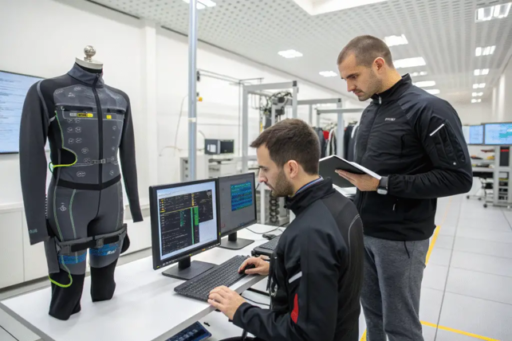
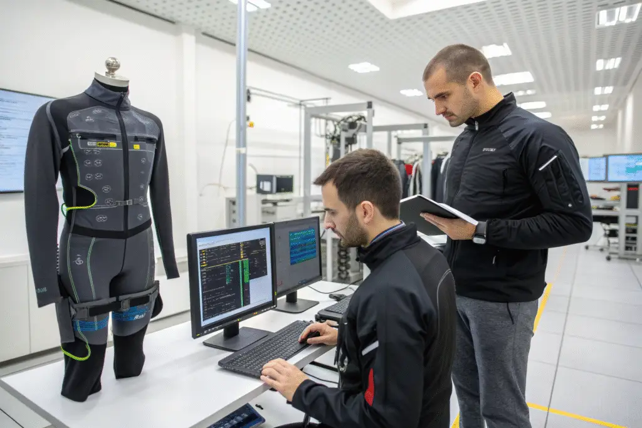
Smart clothing combines ordinary fabric with small electronic components. These components can include textile sensors, conductive fibers, electrodes, and wireless communication systems. The sensors collect signals from the body and send the information to a connected device or digital health platform. Some smart garments use sensors that can detect electrical signals from the heart. Others can measure breathing movement pressure or temperature.
More advanced systems can combine several sensors in one garment to create a broader picture of the user’s physical condition. The main advantage is that the sensors can become part of the fabric rather than being attached as a separate device. This approach can make wearable health monitoring more natural and comfortable.
What Are Biometric Sensors?
Biometric sensors are devices that collect measurable information from the human body. In smart clothing they can be designed to monitor different physiological and physical signals. Common examples include heart rate sensors and temperature sensors. Some systems can also monitor breathing patterns, body movement, and other signals that may provide useful information about physical activity and general wellness.
Textile sensors are especially useful because fabric can bend, stretch, and move with the body. This flexibility helps researchers design wearable devices that are less restrictive than traditional electronic equipment.
What Can Smart Clothing Monitor?
One of the most important benefits of smart clothing is its ability to collect health information over longer periods. Instead of taking a measurement only when a person checks a device, the garment may collect data during normal daily activity. Heart rate monitoring is one important application. Sensors placed in a shirt or similar garment can collect cardiac signals during exercise and rest.
Breathing is another major area. Textile-based sensors can detect changes linked to chest movement and respiration. This can be useful for research into exercise monitoring and remote health observation. Body temperature is also an important measurement. Temperature sensors integrated into fabric may help monitor changes in the body during physical activity or other conditions.
Why Smart Clothing Is Becoming Popular
The biggest reason for the growth of smart clothing is convenience. People already wear clothes every day. If health sensors can be built into those clothes, then monitoring may become less disruptive. A smartwatch can be useful, but it still requires a person to wear a device on the wrist. Smart clothing can spread sensors across different areas of the body.
This can provide researchers and healthcare developers with more options for collecting physiological data. Comfort is another important factor. Textile-based wearable sensors can be soft, flexible, and lightweight.
Why Smart Clothing Is Becoming Popular
- Smart clothing fits into daily life without needing extra devices.
- Soft and flexible sensors can make health tracking more comfortable.
- Sensors can collect health data during daily activities.
- Health data can be sent to smartphones and digital health systems.
- Smart clothing can help users track body signals and health patterns.
Smart Clothing in Healthcare
Healthcare is one of the most promising areas for biometric clothing. Continuous monitoring can provide more information than occasional measurements. For example, a patient recovering from an injury may wear sensorized clothing during rehabilitation. The system could collect movement data and help track changes in physical performance. Smart clothing may also support remote patient monitoring.
A suitable garment could collect selected physiological signals while the person remains at home. This could reduce the need for some routine visits and help healthcare teams monitor patients between appointments. However, smart clothing should not automatically be treated as a medical diagnostic device.
Benefits of Smart Clothing With Biometric Sensors
Smart clothing offers several potential benefits for consumers and healthcare systems. The first is continuous health monitoring. Sensors can collect information while the user follows a normal routine. The second is comfort. Textile-based systems can be designed to move with the body instead of relying on rigid components.
The third is remote monitoring. Connected garments may allow health data to be transferred to digital platforms for further analysis. The fourth is personalized health information. When several types of data are combined, an individual may gain a better understanding of patterns related to exercise, sleep, movement, or other aspects of wellness.
Challenges Facing Smart Clothing
Despite its potential smart clothing still faces several technical and practical problems. One challenge is durability. Clothing is washed folded stretched and exposed to sweat. Electronic components must continue working under these conditions. Researchers therefore need to develop materials that can handle normal use without losing sensor performance.
Comfort is another concern. Adding electronics to fabric should not make the garment heavy stiff or uncomfortable. Accuracy is also critical. A health sensor must produce reliable signals across different body types and levels of movement. Motion can create unwanted signals that make health data harder to interpret.
The Role of AI in Smart Clothing
Artificial intelligence may make smart clothing more useful in the future. Sensors can collect large amounts of information but raw data alone may not provide clear meaning. AI systems can process patterns in physiological and movement data. They may help identify unusual changes or provide personalized feedback. Combining textile sensors with AI could therefore support more advanced digital health systems.
- AI can process large amounts of data from smart clothing sensors.
- AI may identify unusual patterns in heart rate movement or breathing.
- Smart clothing can use AI to offer useful health and fitness insights.
- AI can help connect smart clothing with modern healthcare systems.
- AI can support healthcare professionals but should not replace medical judgment.
Researchers are already examining the combination of smart textiles with advanced data processing and personalized healthcare. Still AI should support rather than replace qualified medical judgment.
The Future of Smart Clothing
The future of smart clothing will likely involve smaller sensors and better materials. Garments may become more comfortable while collecting more types of information. Future smart clothing could combine biometric sensors with wireless communication and energy harvesting technology. This could create garments that operate for longer periods with less need for charging.
Another possible direction is personalized digital health. Instead of collecting data only for general fitness the clothing could become part of a wider health monitoring system. Information from garments could work alongside data from smartphones watches medical devices and other digital health tools.
FAQs
- What is smart clothing with biometric sensors?
Smart clothing with biometric sensors is clothing that contains small sensors designed to collect body data such as heart rate, breathing, body temperature, and movement. - What can biometric smart clothing monitor?
Depending on the design, smart clothing can monitor heart rate, breathing patterns, body temperature, movement, posture, and other physiological signals. - How does smart clothing help with health monitoring?
Smart clothing can collect health data during normal daily activities. Connected systems may send this information to a smartphone or digital health platform for analysis. - Is smart clothing better than a smartwatch?
Smart clothing offers a different approach rather than simply being better. It can place sensors across larger areas of the body and may provide more natural monitoring during certain activities. - What is the future of smart clothing in healthcare?
Smart clothing could support remote patient monitoring, rehabilitation, fitness tracking, and personalized digital health as sensor technology and AI continue to improve.
Buy Microfiber Cleaning Cloths. Click Here
Final Thoughts
Smart clothing with biometric sensors represents an important development in wearable technology. By placing sensors inside familiar garments, researchers can create health monitoring systems that are flexible, comfortable, and suitable for everyday use.
The technology can potentially monitor heart rate, breathing, body temperature, movement, and other physiological signals. It may also support remote patient monitoring, rehabilitation fitness, and personalized digital health.
At the same time smart clothing has important challenges. Accuracy, durability, comfort, battery life, data privacy, and clinical validation must all improve before these systems can reach their full potential. As textile engineering sensors, AI, and wireless technology continue to advance, smart clothing could become a major part of the future of health monitoring.